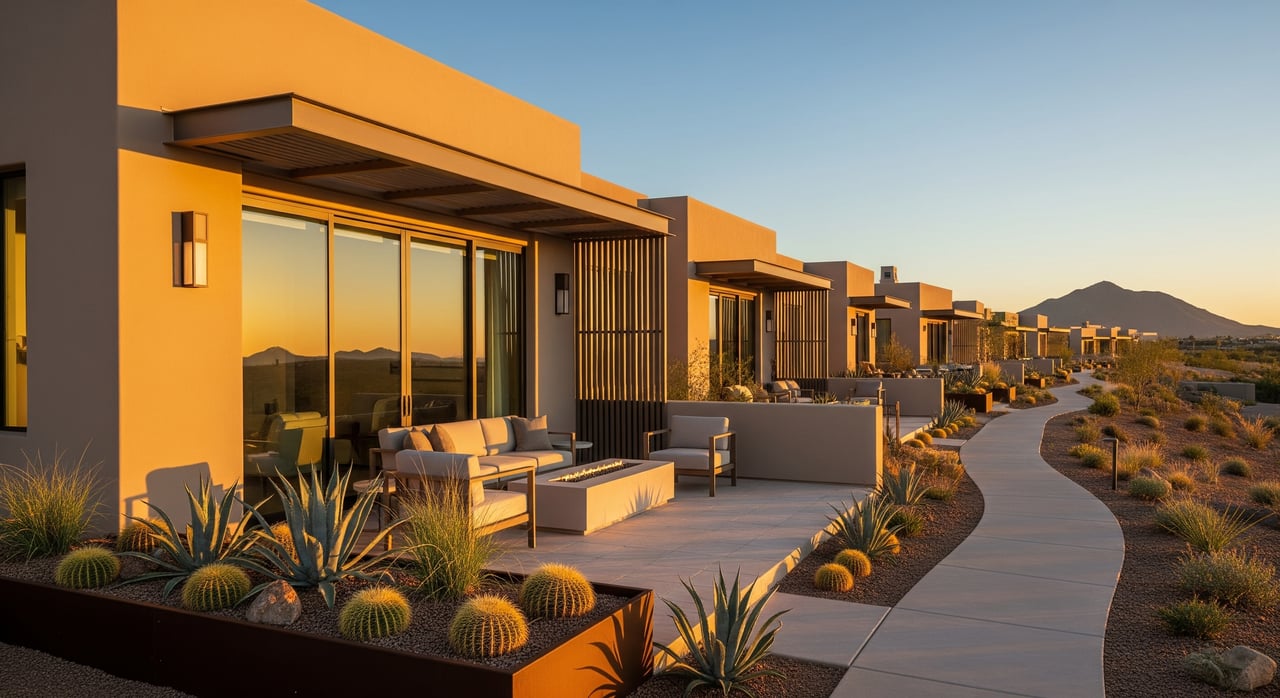
Picture this: you lock the front door, set the thermostat, and hit the road without worrying about yard work or exterior upkeep. If that sounds like your ideal lifestyle, a townhome at The Terraces At The View in Yuma could be a smart fit. You want low maintenance, predictable costs, and a comfortable home base in a sunny desert climate. In this guide, you’ll learn what townhome living at The Terraces typically offers, how to compare costs with a detached home, and the kind of buyer who benefits most. Let’s dive in.
What to expect at The Terraces
Townhomes in Yuma communities like The Terraces often feature attached units with shared walls, 2 to 3 stories, and a 1 or 2 car garage. Many offer small private patios or yards for easy outdoor living. Floor plans commonly range from roughly 1,000 to 2,000 plus square feet with 2 to 3 bedrooms and 1.5 to 3 baths. Exact layouts and finishes vary by building and phase, so review current listings and disclosures for specifics.
Site design and amenities can include common area landscaping, walking paths, and sometimes a pool or clubhouse. The presence of amenities usually affects monthly HOA dues. Proximity to shopping, medical care, and major roads is a major plus in Yuma, especially for seasonal residents who value convenience.
Yuma’s desert climate brings very hot summers and mild winters. Expect higher cooling usage in summer, modest heating needs in winter, and irrigation-driven landscaping. Stucco exteriors and tile roofs are common choices for managing heat and durability.
HOA basics to know
Buying into a townhome community means you are also joining its homeowners association. The HOA sets community standards, manages common areas, and collects dues to fund operations and reserves. Before you commit, review the full HOA packet so you understand governance, costs, and rules.
What dues often include
- Common-area landscaping and irrigation
- Exterior building maintenance, such as roof and exterior paint
- Pest treatments in common areas
- Private road maintenance and common utilities
- Amenity upkeep when applicable, such as a pool or clubhouse
Confirm the line items for The Terraces. Some communities also include water, sewer, trash, or basic cable, while others do not.
Rules to review first
- Rental policies, including any minimum lease terms or short-term rental limits
- Pet rules, such as number, size, and registration requirements
- Parking and guest parking procedures
- Architectural guidelines for exterior changes, patios, and window coverings
Ask for the Covenants, Conditions and Restrictions (CC&Rs), bylaws, rules, recent board meeting minutes, and statements of assessments. This tells you what life in the community is like and what is allowed.
Financial health to check
- Current year operating budget
- Most recent reserve study and contributions
- History of dues increases
- Special assessment history and any planned projects
- Master insurance policy coverage and deductibles
Healthy reserves reduce the risk of surprise special assessments. A clear, realistic budget supports predictable living costs.
Real costs to compare
Comparing a townhome at The Terraces to a detached single-family home is easier when you build a side-by-side budget. Focus on recurring costs first, then one-time items.
Monthly and recurring costs
- Mortgage and property taxes assessed by Yuma County
- HOA dues for The Terraces and any ongoing assessments
- Homeowners insurance, typically an HO-6 policy for townhomes or condos
- Utilities, including electric service that will rise in summer cooling months; local providers often include Arizona Public Service and Southwest Gas, but verify service for the specific address
- Water, sewer, and trash, which may be included in dues or billed separately
- Routine interior maintenance, such as HVAC servicing and appliance care
One-time and closing costs
- HOA transfer or estoppel fees
- Capital contribution or move-in fees if required
- Home inspection and any negotiated repairs
- Immediate upgrades or furnishings
How to run your side-by-side
- List all monthly costs for each property type, including HOA dues for the townhome and a realistic exterior maintenance allowance for the detached home.
- Add insurance quotes, matching coverage to each ownership type. For a townhome, align your HO-6 policy with the HOA’s master policy to avoid gaps.
- Layer in average utilities, noting Yuma’s higher summer electric usage.
- Consider qualitative benefits, such as time saved on exterior maintenance and the convenience of lock-and-leave living.
- Compare total monthly spend and overall lifestyle fit.
Maintenance and insurance tradeoffs
Townhome ownership shifts many exterior responsibilities from you to the association. This can simplify life, but it also ties your experience to the HOA’s management and finances.
Exterior responsibilities
In many Yuma townhome communities, the HOA handles the roof, exterior paint, shared walls, and common landscaping. You typically do not need to schedule major exterior work yourself, which can lower your personal time and variability in costs. Confirm whether exterior HVAC units, windows, and doors fall under the HOA or owner.
Inside your door
You are generally responsible for interior systems and finishes: HVAC servicing, water heaters, appliances, plumbing fixtures, and any interior upgrades. In a desert climate, consistent HVAC maintenance and periodic pest prevention are smart habits. Ask whether the HOA provides perimeter treatments and what owners are expected to handle.
Insurance you need
Request the HOA’s master insurance policy and clarify whether it is bare-walls, walls-in, or all-in. This determines how much interior coverage you need on your HO-6 policy. Also note the master policy’s deductible, since some associations pass a portion of large deductibles to owners after a claim.
Is a Terraces townhome a good fit?
A townhome at The Terraces can be a strong match for several buyer profiles, especially those who value simplicity and consistency.
Great fit for
- Seasonal residents who want a low-maintenance base and easy lock-and-leave
- Downsizers seeking a smaller footprint with exterior care handled by the HOA
- Busy professionals or frequent travelers who prefer predictable monthly costs
- Value-minded buyers comparing affordability with nearby single-family homes, depending on current market data
- Investors if the HOA allows rentals and the local market supports demand
You may prefer a detached home if
- You want full control over exterior design and landscaping
- You need a larger private yard, workshop, or outdoor storage
- You dislike monthly HOA dues and prefer to manage maintenance independently
Buyer checklist for The Terraces
Use this quick list to stay organized as you evaluate a unit at The Terraces.
- CC&Rs, bylaws, rules, and architectural guidelines
- Current budget, latest reserve study, and financial statements
- Recent HOA meeting minutes and any special assessment history
- Estoppel certificate showing the owner’s assessment status
- HOA master insurance declarations and deductible details
- Community map or plat showing unit boundaries and common elements
- Seller disclosures and a full home inspection report
- Written rental and pet policies
Key questions to ask:
- What do dues cover line by line, such as exterior maintenance, roof, pest control, irrigation, water, trash, or cable?
- Are any special assessments planned, and have there been any in the past 5 to 10 years?
- What is the reserve funding level and plan for major repairs?
- What are the rental restrictions and any occupant limits?
- What is the master insurance deductible, and how are claims handled?
- Who maintains HVAC units, windows, and exterior doors?
- Are streets private or public, and how is parking managed for guests?
- Is the HOA professionally managed or self-managed?
Next steps
If low-maintenance, lock-and-leave living in Yuma sounds right, your next move is to gather the HOA documents, review recent sales in The Terraces, and compare the monthly budget against a nearby detached home. A clear, side-by-side view will help you decide with confidence.
Want local insight and hands-on help? Connect with Karen Spencer and the Spencer Property Group. We’ll walk you through The Terraces options, request the right disclosures, and help you compare the costs and lifestyle fit so you can move forward with clarity.
FAQs
Are HOA dues worth it for a lock-and-leave buyer at The Terraces?
- They can be, if you value exterior maintenance, amenity upkeep, and predictable costs; confirm the inclusions, reserve health, and any assessment history first.
Are short-term rentals allowed at The Terraces in Yuma?
- Many associations restrict short-term rentals or set minimum lease terms, so review the CC&Rs and rules before you buy.
Do I still need a home inspection for a townhome?
- Yes, you should inspect the unit’s interior systems and components, since the HOA does not cover interior mechanicals or concealed defects.
What insurance does a Terraces townhome owner need?
- An HO-6 policy that covers your interior, contents, and liability, aligned with the HOA’s master policy type and deductible to avoid gaps or duplicates.
How do special assessments work in a townhome HOA?
- The board can levy assessments for major repairs not covered by reserves; the CC&Rs outline authority and notice, so review them and the reserve study closely.