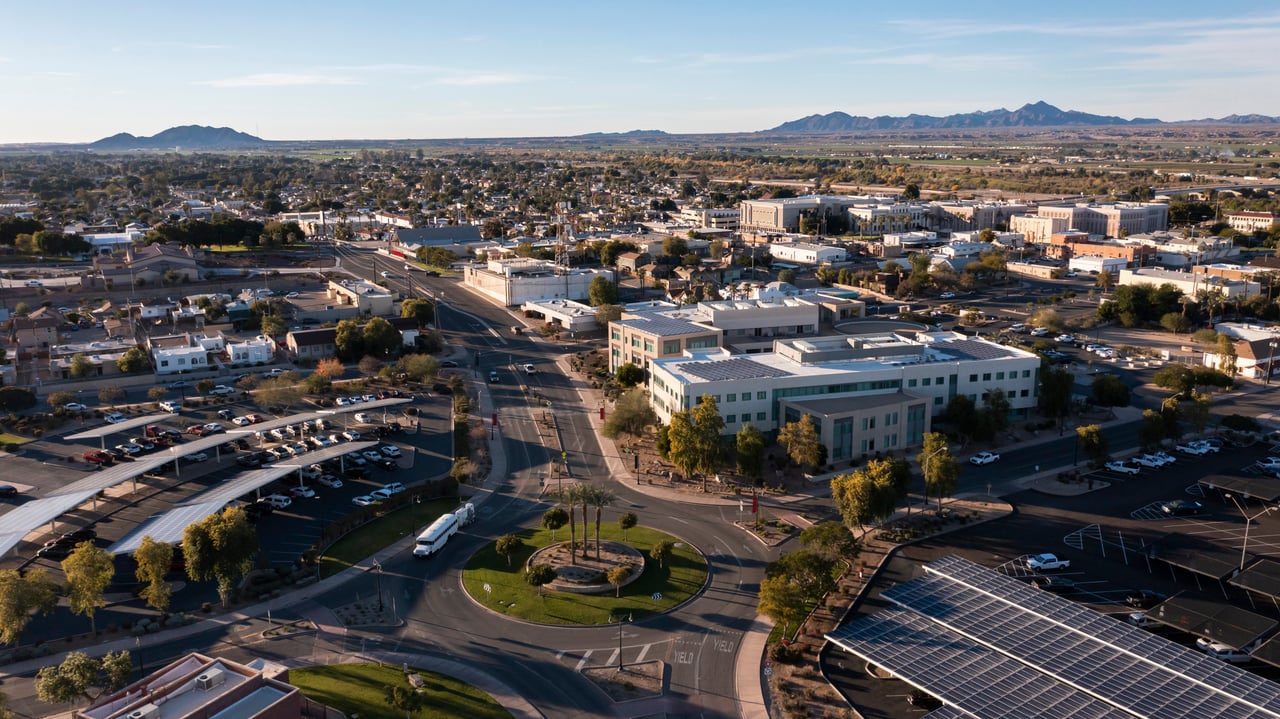
If you are planning to buy in Fortuna Foothills, it helps to know that the path from online search to recorded closing can move quickly once you find the right home. You are not just picking a house. You are evaluating an established Yuma County community where due diligence matters, timelines are front-loaded, and local property details can shape your decision. In this guide, you will learn what to watch for at each step so you can move forward with more confidence. Let’s dive in.
Why Fortuna Foothills Feels Different
Fortuna Foothills is an unincorporated residential community in Yuma County near the Gila Mountains. County planning documents describe growth along Yuma’s eastern edge toward the Foothills, but also note that expansion is limited because much of the county is federal or state land. That means you are often shopping in a more established housing market rather than a large, uniform new-build area.
That local profile matters. Census data show that about 83.6% of homes are owner-occupied, the median owner-occupied home value is $199,200, and 45.3% of residents are age 65 or older. County planners also report a large increase in winter visitors from November through April, so the market can feel more seasonal than some other inland areas.
For you as a buyer, this often means a home search that should focus on property-specific details. In Fortuna Foothills, questions about HOA rules, sewer or septic service, maintenance on older homes, and county disclosure requirements can be just as important as price and layout.
Start Your Search With the Right Questions
Before you fall in love with a home, it is smart to verify the basics that can affect your budget, use of the property, and future resale. Arizona consumer guidance recommends checking nearby land uses, zoning, CC&Rs, road plans, school district information, and utility service details before signing.
In Fortuna Foothills, a few early questions can save you time:
- Is the property in an HOA?
- Is it connected to sewer, or does it use septic?
- Are there easements, deed restrictions, or CC&Rs that affect use?
- What nearby county or desert-land uses could affect privacy or access?
- Is there anything about flood hazard designations or insurance that needs a closer look?
Because this is an established area, homes may vary more from one street to the next than they would in a newer subdivision. You may find different lot setups, utility arrangements, and maintenance histories even within the same general area.
Touring Homes: What to Notice Early
When you tour homes in Fortuna Foothills, try to look beyond finishes and staging. Arizona guidance for resale homes recommends a professional home inspection and termite inspection, along with checking appliances and irrigation. That advice is especially useful in a market where homes may be older and conditions can differ widely.
As you walk through a property, pay attention to details that could lead to follow-up questions later. Think about the age and visible condition of major systems, signs of deferred maintenance, outdoor drainage, and whether the lot layout raises any concerns about access or upkeep.
This is also the time to ask practical questions about the property’s setup. If a home has a pool, there may be barrier rules to verify during due diligence. If the home is served by septic rather than sewer, that should be confirmed early, not after you are already deep into the contract timeline.
Buying Land Requires a Different Checklist
Some buyers in the Yuma area are also interested in land or smaller parcels. If your search includes raw land instead of an existing house, the checklist changes.
According to the Arizona Department of Real Estate, buyers of raw land should verify the Public Report, water supply, and permanent legal access before committing. This is one reason local guidance matters. Land can offer opportunity, but it also requires a different level of verification than a resale home.
What Happens After Your Offer Is Accepted
Once your offer is accepted, the timeline gets real very quickly. In the Arizona REALTORS residential resale contract, time is of the essence, and contract days are counted as calendar days.
That means your first stretch after acceptance is one of the most important parts of the transaction. The main deadlines are front-loaded, so it helps to stay organized and respond quickly when documents arrive.
First 3 Days After Acceptance
In a financed resale transaction, the buyer typically submits the loan application within 3 days after acceptance. During that same period, the seller generally delivers the completed SPDS, or Seller’s Property Disclosure Statement.
This is your first major document review stage. The SPDS can help you spot issues that need more attention during inspections or title review.
The 10-Day Inspection Period
The default inspection period is 10 days after contract acceptance unless the parties agree to a different timeline. During this period, you are expected to investigate the property’s value and condition.
This window can include:
- Home and termite inspections
- Insurance quotes
- Square footage verification
- Flood hazard and flood insurance review
- Sewer or septic review
- Pool barrier review, if applicable
If you find concerns during this period, the contract provides a standard process for responding. The Buyer’s Inspection Notice and Seller’s Response form is the usual tool for inspection negotiations, and if you choose the repair route, the seller has 5 days to respond.
Title Review Deadlines
Within 5 days of receiving the title commitment, you may object to title exceptions, CC&Rs, deed restrictions, and easements. This is another reason to review paperwork promptly.
In a place like Fortuna Foothills, where properties may have different histories and development patterns, title details should never be treated like a formality. Restrictions or easements can affect how you use the property and how appealing it may be to a future buyer.
Appraisal and Loan Contingency Milestones
If your lender requires an appraisal and the property does not appraise for the purchase price, you generally have 5 days after notice of the appraised value to cancel and receive your earnest money back. That gives you an important protection if value does not support the agreed price.
The loan contingency has its own deadline as well. Under the contract, you must obtain loan approval without PTD conditions no later than 3 days before close of escrow. If that approval cannot be obtained and notice is given on time, the contract is canceled and the earnest money is returned.
Earnest Money: How It Is Handled
Earnest money is normally held by escrow. If there is a dispute, the escrow company is authorized to release the funds under the terms of the contract.
What matters most for you is understanding the difference between a protected cancellation and a breach. If you properly disapprove items during the inspection process and cancel within the allowed deadline, the earnest money is released back to you. If a buyer breaches after failing to cure, the seller may be entitled to that earnest money as damages.
A Key Fortuna Foothills Detail: Affidavit of Disclosure
Because Fortuna Foothills is in an unincorporated area of Yuma County, some transactions may trigger an additional disclosure step. For qualifying sales in an unincorporated area involving five or fewer parcels that are not subdivided property, the seller must provide an Affidavit of Disclosure within 5 days after acceptance.
After receiving that affidavit, the buyer has a 5-day rescission right. Arizona law also requires the affidavit to be furnished at least 7 days before transfer in those qualifying transactions.
This is a local detail that buyers should not overlook. Not every property will fall into this category, but when it does, the affidavit becomes an important part of your timeline and decision-making.
Getting Ready for Closing Day
In Arizona, close of escrow happens when the deed is recorded with the county recorder’s office. So while many buyers think of closing as a signing appointment, the real finish line is recording.
Escrow acts as the central hub for closing documents, notices, and settlement paperwork. If an Affidavit of Disclosure is required, escrow can also coordinate its recording.
For financed buyers, the Closing Disclosure must be delivered at least 3 business days before closing. This is your chance to review the final numbers carefully and compare them with your earlier Loan Estimate before signing.
The Final Walkthrough Matters
Before closing, a final walkthrough helps confirm that agreed repairs were completed and that the home is still in substantially the same condition as when the contract was accepted. It is a practical final check before ownership changes hands.
This step can feel routine, but it protects you from surprises. If something has changed since inspections or repair negotiations, it is better to identify it before recording than after.
Protect Yourself From Wire Fraud
As closing approaches, buyers also need to stay alert about fraud. Arizona REALTORS warns buyers to independently confirm wiring instructions and to be cautious about last-minute changes sent by email.
That simple habit can help protect one of the biggest financial transfers you may ever make. If anything about wiring instructions seems unusual, slow down and confirm it through a trusted, verified contact before sending funds.
Why Local Guidance Helps
A Fortuna Foothills purchase is not only about finding the right floor plan. It is about managing deadlines, reviewing disclosures, coordinating inspections, and understanding property-specific details in an established unincorporated area.
That is where local support can make a real difference. A knowledgeable buyer’s agent can help you stay on top of contract dates, connect with inspectors and title staff, and keep the process moving, while qualified inspectors and other professionals evaluate the property’s physical condition and specific issues.
If you are planning your move in Fortuna Foothills, working with an experienced local team can help you move from search to closing with fewer surprises and better information. When you are ready for hands-on guidance in Yuma County, connect with Karen Spencer and the Spencer Property Group.
FAQs
What makes buying a home in Fortuna Foothills different from buying in a newer subdivision?
- Fortuna Foothills is an established unincorporated community, so you may need to look more closely at HOA rules, sewer or septic service, older-home maintenance, title issues, and county-level disclosures.
What should buyers verify early when searching for Fortuna Foothills homes?
- You should check nearby land uses, zoning, CC&Rs, road plans, utility service details, whether the property is in an HOA, and whether it is served by sewer or septic.
How long is the inspection period in an Arizona resale contract?
- The default inspection period is 10 calendar days after contract acceptance unless the parties agree to a different timeline.
What happens to earnest money if a Fortuna Foothills buyer cancels during inspections?
- If you properly disapprove items and cancel within the allowed inspection deadline, the earnest money is typically released back to you.
What is the Affidavit of Disclosure for unincorporated Yuma County property?
- In qualifying sales involving five or fewer parcels that are not subdivided property, the seller must provide an Affidavit of Disclosure, and the buyer gets a 5-day rescission period after receiving it.
When is a home purchase officially closed in Arizona?
- In Arizona, close of escrow occurs when the deed is recorded with the county recorder’s office, not just when the documents are signed.